Why Free PDF Patterns Are Perfect for Beginners
Starting your crochet journey can feel overwhelming when you’re staring at yarn and a hook for the first time. Free crochet patterns pdf format remove the financial risk from learning, letting you experiment with different styles and project types without spending a cent. The crochet patterns segment is the fastest-growing product type within the needlecraft patterns market, projected to expand at a CAGR of approximately 7.1% through 2034, with more than 85 million downloads recorded globally.
PDF format offers unique advantages over printed books or online-only tutorials. You can download patterns instantly to your phone, tablet, or computer, then access them offline while you work—no need to keep a browser tab open or worry about screen timeouts. Print exactly what you need, mark up your pages with notes about yarn substitutions or stitch counts, and build a personal library that travels with you.
The beginner-friendly ecosystem is robust. Beginner patterns dominate with 3,587 patterns, followed by Intermediate (2,256) and Advanced (128) in major pattern libraries. This distribution means you’ll never run out of appropriate projects as you build skills. Free crochet patterns pdf format also let you test whether you enjoy a particular project type—amigurumi, garments, home décor—before investing in premium designs.
The #CrochetTok community on TikTok has accumulated over 15 billion content views as of early 2026, creating a vibrant ecosystem where makers share their free pattern finds, troubleshoot together, and celebrate finished objects. Free patterns become conversation starters and shared experiences within this supportive community.
Finding Quality Beginner Patterns Without Signup
Not all free patterns are created equal. Quality patterns share several hallmarks: clear stitch abbreviations defined at the beginning, row-by-row instructions rather than vague descriptions, and realistic photos of the finished item from multiple angles. Look for patterns that specify both US and UK terminology, or at least clearly state which system they use.
The best pattern sources offer instant PDF downloads without requiring account creation or email signup. Major retailers like Yarn.com and LoveCrafts provide hundreds of free crochet patterns pdf format with simple click-to-download functionality. These established platforms curate their free offerings, ensuring basic quality standards and readability. You’ll find filtering systems that let you sort by skill level, project type, and yarn weight.
Independent designers often share free patterns on their websites as portfolio pieces or community goodwill. These gems frequently include extra details like video tutorials, stitch-by-stitch photo guides, or troubleshooting sections addressing common mistakes. When evaluating an independent pattern, check the designer’s credentials: Do they have other patterns available? Are there finished project photos from other makers in the comments or on Ravelry?
Red flags include patterns with no gauge information, missing stitch counts for rows, or instructions that jump from step 3 to step 7 with no explanation. The free amigurumi crochet patterns guide offers deeper insights into evaluating pattern quality specifically for stuffed toy projects.
Copyright awareness matters even with free patterns. As soon as you write or film a crochet pattern, it is copyrighted automatically in the U.S., with no need to register with the U.S. Copyright Office. Free doesn’t mean public domain—you’re receiving a license for personal use, which typically allows you to make items for yourself, gifts, or small-scale sales, but prohibits redistributing the pattern itself.
Understanding Amigurumi: Your First Easy Projects
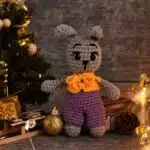
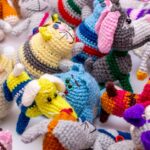
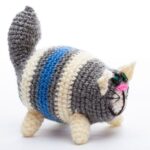
Amigurumi—the Japanese art of crocheting small, stuffed yarn creatures—has become the gateway drug for modern crocheters. These adorable projects work up quickly, require minimal yarn investment, and deliver that dopamine hit of a completed project in just a few hours. Almost all amigurumi projects use basic single crochet stitches (US terminology), making them technically accessible even if the three-dimensional construction feels intimidating at first.
The easiest amigurumi for beginners are simple sphere or oval shapes that don’t involve lots of parts to sew on. Think basic balls, eggs, or blob-shaped creatures rather than articulated dolls with separate arms, legs, and intricate facial features. Your first amigurumi might be a simple octopus (just a ball with tentacle tubes), a basic mushroom (a sphere cap on a cylinder stem), or a round animal face that becomes a keychain.
Amigurumi introduces you to working in the round, a fundamental crochet technique that opens doors to hats, baskets, and countless other projects. You’ll start with a magic ring—a technique that creates a tight, adjustable center circle with no hole—then work in continuous spiral rounds rather than joining each round with a slip stitch. That stitch marker becomes your best friend, preventing the confusion of losing your place in the pattern.
The tight, dense fabric characteristic of amigurumi requires using a hook size smaller than the yarn label recommends. This creates fabric with no gaps, ensuring your stuffing doesn’t peek through or escape. A typical pattern might call for worsted weight yarn with a 3.5mm or 4mm hook instead of the 5mm hook the yarn label suggests.
Common amigurumi-specific terms include invisible decrease (a decrease stitch that creates a neater finish than a regular decrease) and safety eyes (plastic eyes with washers that lock into the fabric before stuffing). Patterns often specify working in front loops only (FLO) or back loops only (BLO) to create texture or define where limbs attach.
Decoding Patterns: US vs UK Terms & Abbreviations
The single biggest source of beginner confusion in crochet patterns is the terminology divide between US and UK systems. A US "single crochet" (sc) is the same stitch as a UK "double crochet" (dc), and a US "double crochet" (dc) is a UK "treble crochet" (tr). This isn’t a minor variation—it’s a complete shift that will make your project turn out entirely wrong if you use the wrong system.
When you encounter a new pattern, immediately check the terminology system before you start. If it’s not explicitly stated, look for context clues: Does the pattern mention "double crochet" as a basic stitch for beginners? That suggests US terms, since UK double crochet (US single crochet) is indeed the most basic stitch.
Beyond the US/UK divide, abbreviations vary slightly between designers despite industry standardization efforts. Common abbreviations include sc (single crochet), dc (double crochet), hdc (half double crochet), inc (increase), dec (decrease), ch (chain), sl st (slip stitch), MR (magic ring), FLO (front loops only), and BLO (back loops only). Most patterns include an abbreviation key, but keeping a reference chart handy helps when you encounter an unfamiliar term mid-project.
Stitch count notations follow patterns too. Instructions like "sc 6" mean work six single crochet stitches, while "(sc, inc) × 6" means repeat the sequence of one single crochet followed by one increase six times total, resulting in twelve stitches. The notation "2 sc in next st" means work two single crochet stitches into the same stitch (an increase), while "sc2tog" or "dec" means decrease by working two stitches together into one.
Gauge information tells you how many stitches and rows per inch the designer achieved with their yarn and hook combination. For amigurumi, exact gauge matters less than for garments since you’re not fitting a body, but it helps you estimate finished size.
Organizing & Managing Your Downloaded Pattern Library
After downloading your tenth free pattern, you’ll face a new challenge: finding that perfect dishcloth pattern you saved three months ago among dozens of similarly named PDFs. Start by creating a dedicated folder structure on your device: organize by project type (Amigurumi, Garments, Home Décor, Accessories), then by skill level or status (To Try, In Progress, Completed).
Rename downloaded files immediately with descriptive names that include the project type, designer name, and key details. Instead of "patternfinalv2.pdf," use "AmigurumiBunnySmallStitchesBeginner.pdf" or "GrannySquareBlanketVintage_Intermediate.pdf." This front-loads the information you need when scanning your library and makes search functions actually useful.
Digital tools can enhance your organization system. Apps like Ravelry (free) let you add patterns to your library, mark them as favorites or queued, and track which ones you’ve started or completed. You can add notes about yarn substitutions, size modifications, or difficulty observations. Cloud storage services like Google Drive or Dropbox keep your pattern library accessible across devices and backed up against device failure.
For patterns you use frequently, consider printing and storing them in a three-ring binder with clear sheet protectors. Physical copies let you mark up instructions with highlighter, cross off completed rows, and keep the pattern next to your work without draining your device battery. This hybrid digital-physical system gives you the best of both worlds: searchable digital archives and tactile, annotation-friendly working copies.
Periodically audit your collection and delete patterns you’ll realistically never make. Be honest about your skill trajectory and interests—keeping only patterns that genuinely excite you makes your library more useful. The organizing yarn collection guide offers complementary strategies for managing the physical materials that pair with your digital pattern library.
As your skills grow, you might invest in premium patterns that offer more detailed instructions, unique designs, or support independent designers. The professional crochet services available in 2026 can also help when you want to commission custom patterns or need expert guidance on complex projects. But free crochet patterns pdf format will always have a place in your practice—they’re how you experiment, learn new techniques, and share the joy of making with others who are just beginning their own crochet journey.