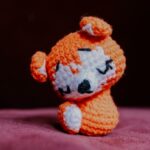
Starting your first amigurumi project brings an exciting question: how much yarn do you actually need? Nothing’s more frustrating than running out mid-project or buying five skeins when one would do. The answer depends on your project size, yarn weight, and hook choice, but understanding the basics means you’ll shop confidently and avoid waste. Whether you’re stitching a tiny keychain charm or a huggable companion, this guide breaks down exactly how much yarn for amigurumi you’ll need and how to calculate it for any pattern.
Yarn Yardage by Project Size
The size of your finished amigurumi is the biggest factor determining how much yarn you’ll use. Small amigurumi patterns typically fall into three categories, each with predictable yardage ranges that help you plan purchases.
Small projects measuring 3 to 5 inches tall require 50 to 100 yards of worsted weight yarn. Think keychains, ornaments, or tiny desk buddies—these quick makes are perfect for testing new colors without committing to a full skein. A small amigurumi uses approximately 20 to 50 grams of yarn, which means a standard 100-gram skein will yield two to five small toys depending on your tension and design complexity.
Medium amigurumi ranging from 6 to 10 inches need 150 to 250 yards of yarn. This category covers most beginner-friendly patterns: classic teddy bears, simple dolls, and palm-sized animals. You’re looking at 50 to 150 grams of yarn per project. A single worsted weight skein (typically 200 to 250 yards) will complete most medium projects with yarn left over for details or repairs.
Large amigurumi measuring 12 inches or taller can consume 300 to 400 yards or more. These statement pieces—oversized plushies, elaborate dolls with clothing, or multi-part designs—require 150 to 400 grams of yarn. For these projects, plan on purchasing at least two skeins of your main color, plus additional skeins for contrasting details.
The Amigurumi Yarn Calculator offers precise estimates when you input your project dimensions and yarn weight, taking the guesswork out of shopping. These ranges assume standard worsted weight yarn; lighter or heavier weights shift the numbers proportionally.
Yarn Weight, Fiber & Hook Size Impact
Yarn weight dramatically changes how much yarn for amigurumi you’ll need, even for identically sized finished toys. Weight 4 worsted yarn is the most beginner-friendly option, with stitches easy to see and count, resulting in toys measuring 12 to 18 centimeters for most body parts. DK weight (category 3) and worsted weight (category 4) are the most popular choices for amigurumi, balancing ease of handling with satisfying project size.
Fiber type affects yardage in subtle but real ways. Acrylic yarn is soft, affordable, and easy to find, making it the go-to for beginners. Cotton yarn is durable, breathable, and machine-washable, but it’s denser than acrylic—a 50-gram ball of cotton contains fewer yards than a 50-gram ball of acrylic. Chenille and velvet yarns create plush, textured toys but consume more yardage per inch of fabric because their bulk fills space differently than smooth yarns.
Hook size directly impacts yarn consumption because it controls fabric density. According to How to Choose Yarn for Amigurumi: Weight, Fiber, and Color Guide for Beginners, you should use a hook 1 to 1.5 millimeters smaller than the yarn label suggests. This creates the tight, gap-free fabric amigurumi demands. A smaller hook means more stitches per inch, which translates to slightly higher yardage consumption—but the difference is modest, typically 10 to 15 percent compared to using the recommended hook size.
When you size down your hook, you’re trading a small increase in yarn usage for a professional finish. The tighter stitches prevent stuffing from showing through and give your amigurumi structure and durability. For worsted weight yarn, most patterns call for a 3.5mm to 4mm hook, while DK weight pairs with 2.5mm to 3mm hooks.
Calculating Yardage for Your Pattern
Most published patterns list required yardage, but free patterns and vintage designs often skip this detail. When a pattern doesn’t specify yardage, you can estimate using the finished dimensions and standard ranges. Measure the pattern’s stated finished height and width, then match it to the size categories: small (50-100 yards), medium (150-250 yards), or large (300+ yards).
For patterns with multiple colors, add up yardage for each color separately. A pattern calling for “one skein each of white, brown, and pink” might use 80 yards of white for the body, 40 yards of brown for details, and 20 yards of pink for accents. Knowing the breakdown helps you shop efficiently—you might buy a full skein of white but use scraps from your stash for the smaller amounts.
When adapting or scaling patterns, yardage changes exponentially, not linearly. Doubling a pattern’s dimensions roughly quadruples the yarn needed because you’re increasing both height and width. If a 6-inch bear uses 150 yards, a 12-inch version will need approximately 600 yards, not 300. The Amigurumi Yarn Calculator handles this math automatically when you input your target size.
Weight conversions help when patterns list grams instead of yards. For worsted weight acrylic, 50 grams equals roughly 100 to 120 yards; 100 grams equals 200 to 240 yards. Cotton is denser: 50 grams equals approximately 85 to 100 yards. Check your yarn label for the exact yardage per ball—this number varies by brand and fiber blend.
Creating a test swatch reveals your personal yardage consumption. Crochet a 4-inch square using your chosen yarn and hook, then unravel it and measure the yarn used. Multiply that length by the square inches in your pattern’s pieces to estimate total yardage. This method accounts for your individual tension, which can vary significantly from published estimates.
Budget Tips: Buy Extra & Substitution Math
Always buy more yarn than the pattern requires. A 10 to 20 percent buffer protects against dye lot variations, tension differences, and the occasional mistake that requires frogging and re-stitching. If a pattern calls for 200 yards, purchase 220 to 240 yards. For projects using multiple skeins, buy all skeins from the same dye lot—the lot number printed on the label ensures color consistency.
Yarn substitution requires careful math to avoid mid-project shortages. When swapping brands or weights, compare yardage per ball, not ball weight. A 100-gram skein of Brand A might contain 220 yards while Brand B’s 100-gram skein holds 240 yards. If your pattern needs two skeins of Brand A (440 yards total), you’ll need two skeins of Brand B as well—but you’ll have more yarn left over.
Changing yarn weight means recalculating everything. Substituting DK weight for worsted weight reduces your finished size by roughly 20 to 25 percent unless you adjust your hook size and stitch counts. If you’re determined to substitute, work a gauge swatch first and measure how many stitches per inch you’re achieving compared to the pattern’s gauge. Adjust your hook size until your gauge matches, then proceed with confidence.
Shopping sales and building a stash saves money over time. Sustainable crochet materials don’t have to break the bank—buying worsted weight acrylic in multi-packs during craft store sales brings per-skein costs down to $2 to $3. Neutral colors (white, black, beige, brown) work for countless projects, making them smart bulk purchases.
Leftover yarn from completed projects builds a scrap stash perfect for small amigurumi. Those 30-yard remnants that seem useless alone combine beautifully for multi-color projects or tiny accessories. Track your stash yardage using a notebook or app so you know what’s available before shopping for new projects.
Stuffing & Materials Checklist
Beyond yarn, amigurumi requires stuffing and assembly supplies that affect your project budget and timeline. Polyester fiberfill is the standard stuffing choice, available at craft stores in bags ranging from 100 grams to 1 kilogram. A 250-gram bag is usually enough for four to five medium-sized toys, making it an economical choice for beginners planning multiple projects.
Stuffing quantity varies by project size and desired firmness. Small amigurumi (3-5 inches) need approximately 10 to 20 grams of fiberfill. Medium projects (6-10 inches) consume 30 to 60 grams. Large amigurumi (12+ inches) require 80 to 150 grams or more. Firmly stuffed toys hold their shape better but feel less squishy; adjust to your preference.
Essential tools complete your materials list. A tapestry needle with a large eye and blunt tip weaves in ends and sews pieces together—buy a set with multiple sizes for different yarn weights. Sharp scissors with pointed tips trim yarn cleanly and precisely. Stitch markers track your place in spiral rounds, preventing counting errors that waste yarn through frogging.
Safety eyes add personality to amigurumi faces. Common sizes include 6mm, 8mm, and 10mm, with larger sizes suiting bigger projects. For children over three, they’re considered safe when properly attached; for younger children, embroider eyes instead to eliminate choking hazards. Purchase safety eyes before starting your project since they install before stuffing, and running out mid-assembly means ordering online and waiting.
Optional supplies enhance your results without being mandatory. Locking stitch markers stay in place better than simple loops. A row counter tracks rounds in complex patterns. Fabric glue secures felt details or reinforces joints in poseable amigurumi. Best yarn for amigurumi guides help you choose quality materials that work well together.
Budget your first project realistically: one skein of worsted weight yarn ($4-6), a bag of fiberfill ($5-8), safety eyes ($3-5 for a multi-pack), and basic tools if you don’t own them ($10-15) totals $22-34. Subsequent projects cost less because tools and leftover stuffing carry forward. Free crochet patterns in PDF format eliminate pattern costs, letting you invest in quality materials instead.
Understanding how much yarn for amigurumi you need transforms shopping from guesswork into planning. Small projects need 50 to 100 yards, medium projects require 150 to 250 yards, and large amigurumi consume 300 yards or more—but yarn weight, fiber type, and hook size all shift these numbers. Calculate yardage using pattern dimensions, buy 10 to 20 percent extra as a buffer, and track your stash to maximize your budget. With stuffing, tools, and a clear yardage estimate, you’re ready to start any amigurumi project confidently, knowing you have exactly what you need to finish that adorable creation.